


16 Apr How Bathtime Can Support Your Child’s Swimming Lessons
For many parents, swimming lessons feel like the main event when it comes to helping their child learn to swim. However, what happens at home can be just as important. In fact, one of the most powerful ways to support your child’s progress in the pool is something you’re already doing every day… bathtime.
Whether your child is just starting their swimming journey or already attending lessons, those few minutes in the bath offer a valuable opportunity to build water confidence in a relaxed and familiar environment. With the right approach, bathtime can help your child feel more comfortable, more capable, and more ready to get the most out of their swimming lessons.
Building Water Confidence in a Familiar Environment
The bath is often a child’s first real experience of water, and it provides a safe, controlled space where they can explore without pressure. Unlike a swimming pool, which can feel large and unfamiliar, the bath is predictable and comforting. This makes it the perfect place to begin building water confidence from an early age.
Play is a big part of this. Simple activities such as splashing, playing with toys, and enjoying relaxed time in the water all help children feel at ease. Keeping things light-hearted and low pressure is key. Children pick up on how we as parents respond, so if bathtime feels calm and enjoyable, they are more likely to associate water with positive experiences.
It’s also important to take things at your child’s pace. Building confidence with water, especially around the face, doesn’t happen overnight. Small, gentle steps will always lead to better long-term confidence.
Using Simple Techniques That Mirror Swimming Lessons
Bathtime can also be a great place to introduce simple techniques that reflect what your child may experience in their swimming lessons. These don’t need to be complicated, but they can make a big difference in helping your child feel more prepared.
For example, encouraging your child to blow bubbles in the water is a fantastic way to introduce early breathing techniques. You can even make it fun by asking them to hum, which naturally creates bubbles through the nose. This helps them become more comfortable with water around their face in a playful and engaging way.
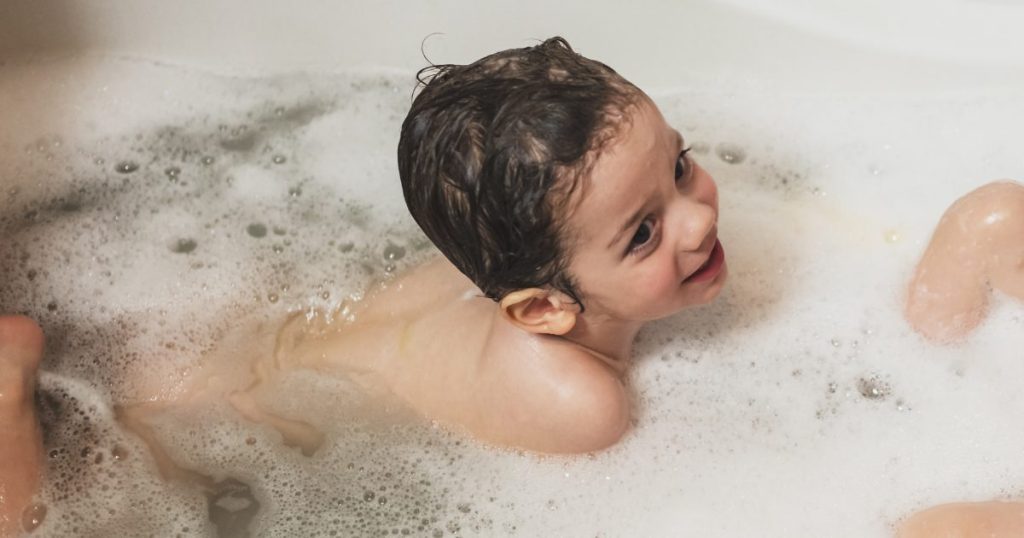
Another useful approach is allowing your child to lie back in a shallow bath so their ears are in the water, with their head supported by the bottom of the bath. This can help them get used to the sensation of being more horizontal in the water, which is an important foundation for floating.
Supporting Progress Between Lessons
Swimming is a skill that develops through consistency, and weekly lessons alone are often not always enough for children to feel fully confident. This is where bathtime becomes a valuable way to reinforce what they are learning.
By regularly revisiting simple movements and skills at home, you help your child build familiarity and confidence. Gentle kicking, reaching for toys, or practising blowing bubbles can all support their development in a natural and pressure-free way.
It’s important to remember that this isn’t about perfect technique or pushing your child to achieve something specific. Instead, it’s about creating positive repetition. When children are regularly exposed to water in a calm environment, they are more likely to feel relaxed and ready to engage during their lessons.
Taking a “baby steps” approach is especially important when it comes to getting the face wet or going underwater. Gradual exposure, supported by encouragement and patience, will always be more effective than rushing the process.
Final Thoughts
As a parent, you play a key role in shaping your child’s relationship with water. While swimming lessons provide the structure and guidance needed to learn essential skills, the time you spend at home can have a lasting impact on how your child feels in the water.
Bathtime is a simple but powerful tool that can help build trust, reduce fear, and develop confidence from an early age. By keeping things playful, calm, and consistent, you are giving your child the best possible foundation for their swimming journey.
If you want to ask us any questions relating to anything mentioning in this article, you can get in touch with us via email: info@brightwaterswim.co.uk, via social media or use our contact form here.
No Comments